For personal trainers, free and no signup

What to charge as a personal trainer: the calculator for your hourly session rate

Session pricing isn't something you copy from the trainer at your gym. It comes from four numbers of yours: how much you want to earn, what it costs to work, how much goes to taxes, and how many hours become actual paid sessions. Enter yours and see the minimum hourly rate and monthly package prices.

What's left for you after paying for everything.
Transportation, phone, annual CREF fee divided by 12, accountant, equipment, apps.
It depends on your tax regime and on card and Pix fees. Check with your accountant.
The hours you want (or can) give.
No-shows without notice that you don't charge for, cancellations, empty slots.
Include long holiday weekends when you don't take clients.
Your hourly rate needs to be at least
R$ 85,19
Below that, the monthly math doesn't add up.
2x per week package R$ 738,27/month
3x per week package R$ 1.107,41/month
Gross revenue you need R$ 7.666,67/month
Paid hours per month 90 h
Bill my clients in the app, free

How the math works

Four steps. The calculator does them all, but it's worth understanding each one so you adjust the right number.

1. Income and costs

Add up what you want to take home and what you spend to work each month. In the example: R$6,000 + R$900 = R$6,900.

2. Taxes and fees

Divide by what's left after them. With 10%, every R$100 charged becomes R$90: R$6,900 ÷ 0.90 = R$7,666.67 in revenue.

3. Hours that become sessions

Available hours aren't paid hours. 25 hours a week over 48 weeks, divided by 12, comes to 100 hours; after taking out 10% for missed sessions, 90 remain.

4. What your hour is worth

Revenue ÷ paid hours: R$7,666.67 ÷ 90 = R$85.19. That's the floor. Experience, specialty and travel go on top of it.

Hourly sessions, monthly packages or online coaching

Your hourly rate is the foundation of any pricing model. What changes is how it's delivered to the student:

Mistakes that make trainers undercharge

To go beyond the math (positioning, price range, and how to present your rate to clients), read how to price personal training services e how to charge clients without losing the friendship.

From pricing to billing, no spreadsheet

Once you've set your rate, the job is getting the money in every month. In personal trainer app from Trainer Connect:

  • the client's contract stores the session or package price;
  • the schedule marks each session as completed, missed, or made up;
  • the month-end close adds everything up by client, including sessions on holidays, and leaves the billing ready to send;
  • the payment link goes out by Pix or card into your own account (Mercado Pago, Asaas or Stripe, with a 1% fee per paid charge) or by manual Pix, with no commission;
  • the client gets a reminder before the due date and the payment lands in the cash book automatically.

See the personal trainer software module by module, with the plans (free for 1 client), or compare with other apps in the ranking of the best personal trainer apps.
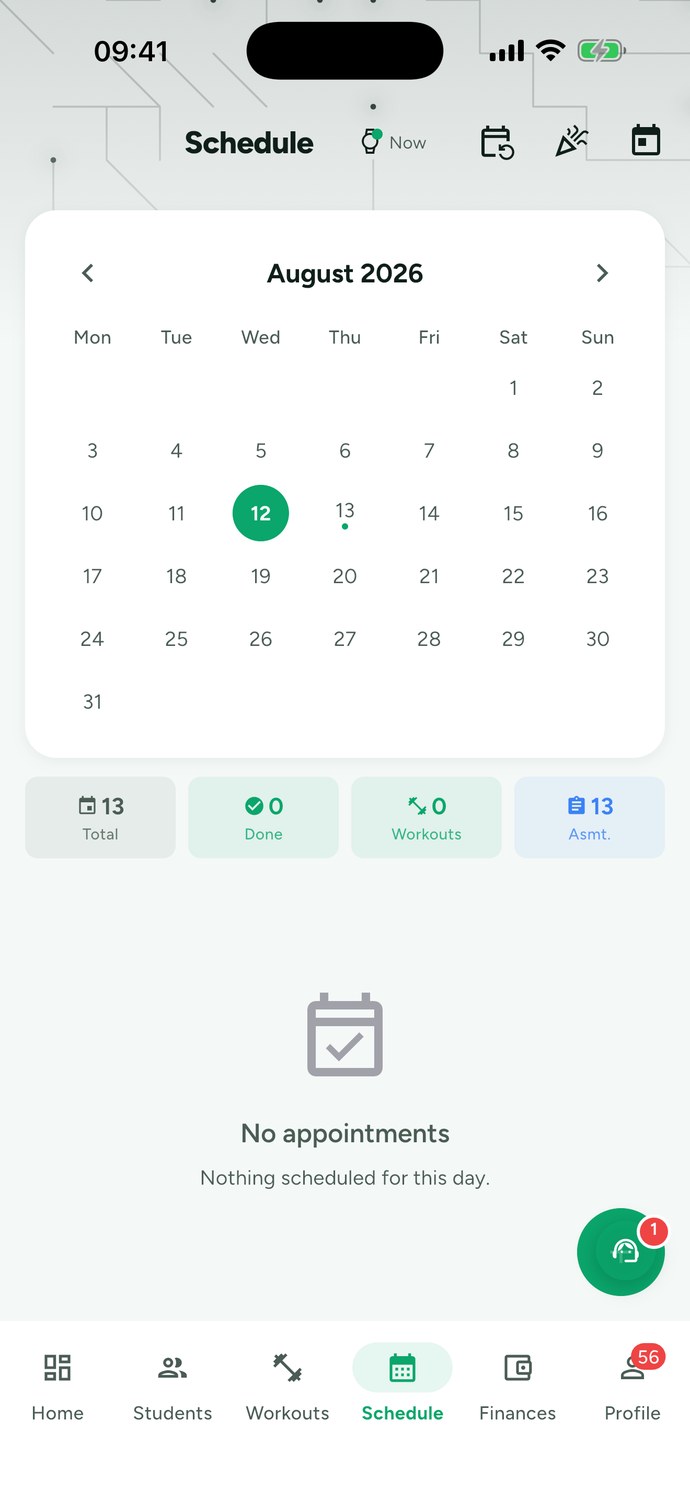
Trainer schedule in Trainer Connect showing the day's sessions and the status of each

Personal training pricing FAQ

How much should you charge per personal training session?
There's no single price. The minimum value of your hour is the revenue you need each month divided by the hours that turn into paid sessions. With a desired income of R$ 6,000, R$ 900 in costs, 10% in taxes and fees, 25 session hours per week, 10% of missed sessions with no charge, and 4 weeks of vacation, the minimum hourly rate comes to R$ 85.19. Plug in your own numbers in the calculator.
How much does 1 month of personal training cost?
It depends on how many times a week the client trains and the trainer's hourly rate. The monthly package is the hourly rate times the month's sessions, counting 4.33 weeks per month (52 weeks divided by 12). In the calculator's example, 2 sessions a week comes to R$738.27 and 3 sessions a week to R$1,107.41 per month.
How do you calculate your hourly session rate?
Add up the income you want and your fixed monthly costs, then divide by what's left after taxes and fees (at 10%, divide by 0.90). Then divide by the paid hours in the month: weekly session hours times weeks worked per year, divided by 12, minus the percentage of missed sessions you don't bill for.
Should I charge for a class the student missed?
Agree on it in the contract before you start. A common rule: a cancellation with advance notice, say 24 hours, becomes a makeup session; a no-show counts as a session delivered. If you don't charge for missed sessions at all, raise the missed-session percentage in the calculator, because they come out of your hourly rate.
How do you charge for online coaching?
Per month, not per hour. Estimate how many hours a week each client takes from you (building and adjusting the program, answering messages, checking logs), find your hourly rate in the calculator, and multiply by that client's hours for the month.
When should you raise your session rate?
Once a year, with the increase agreed in the contract (for example, tied to the IPCA), and whenever your costs go up or your schedule fills up. New clients start at the new price.

Other calculators

Charge the right amount, every month

Contract, schedule, month-end close and a Pix or card payment link in the same app. Free for 1 client, no card required.

Create free account

The calculator is a support tool and does not replace advice from an accountant. The tax percentage varies with each professional's tax regime.