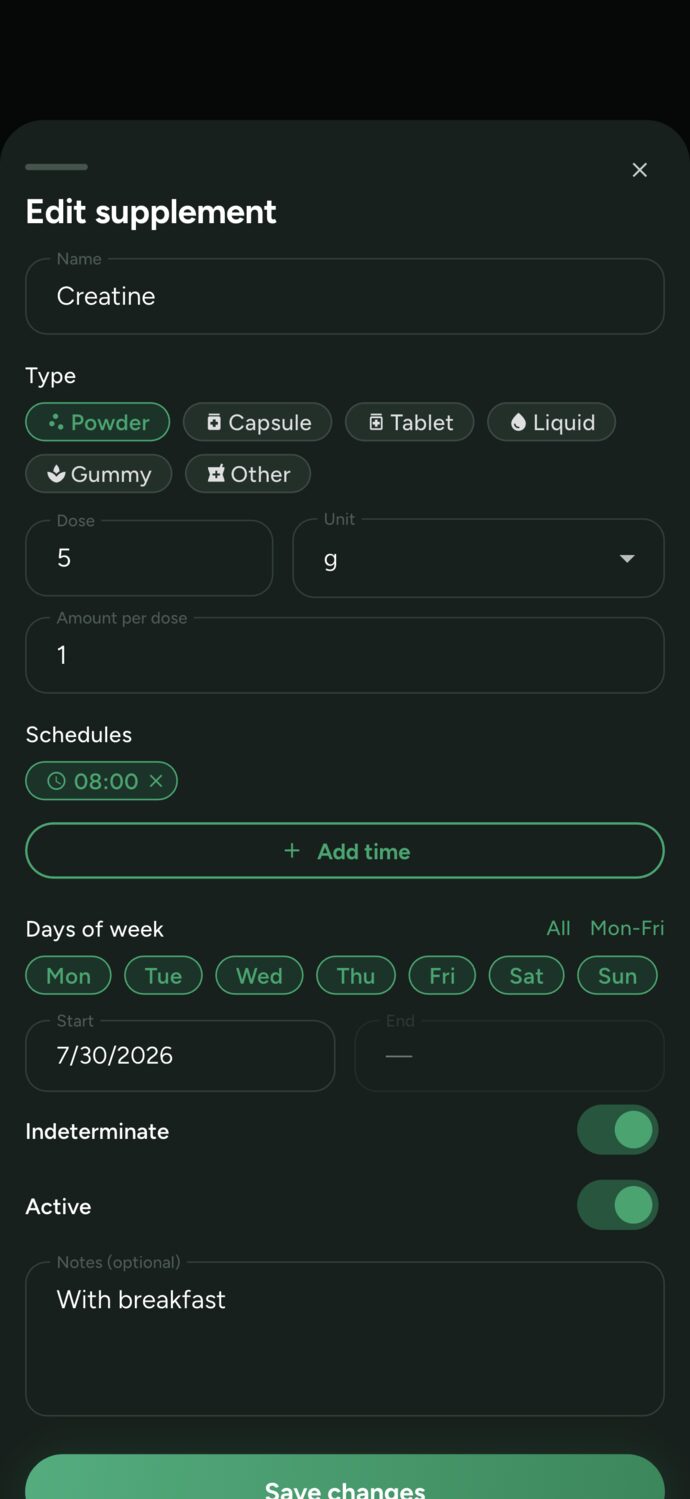
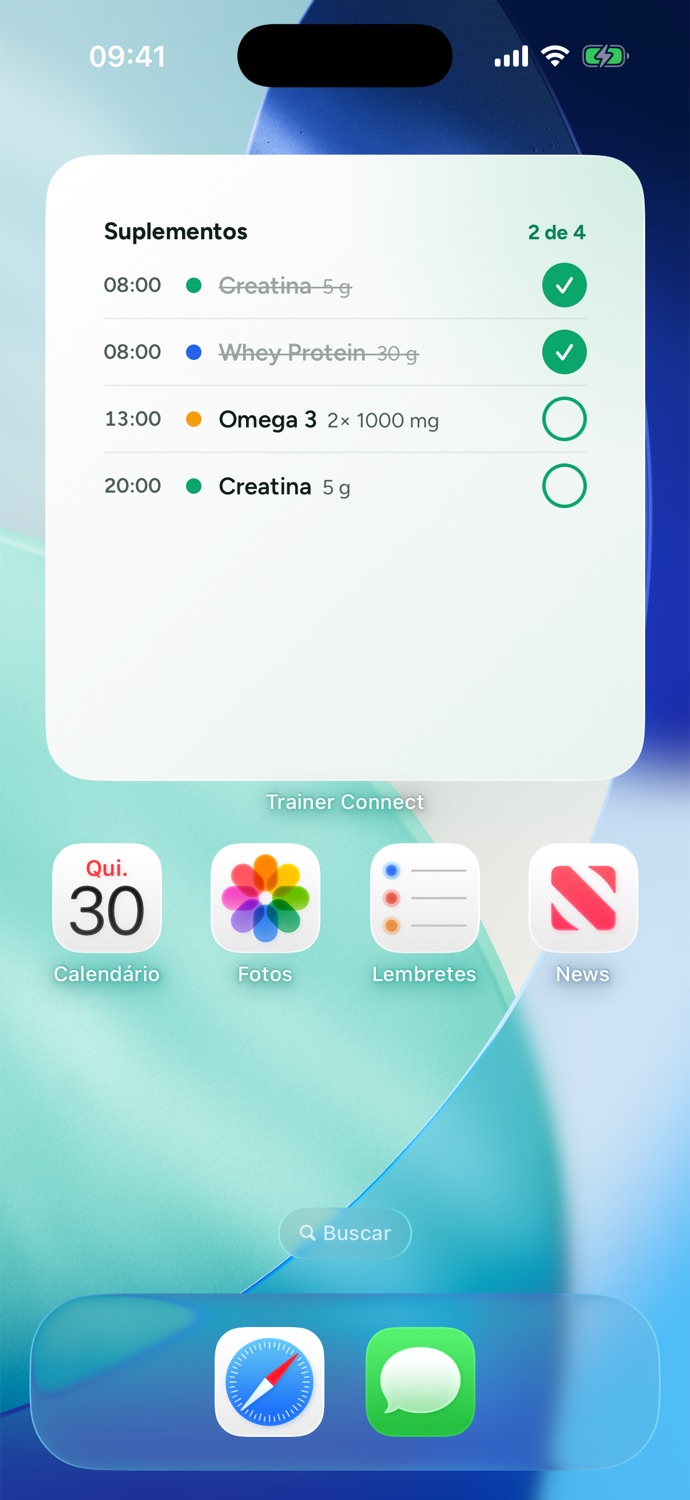
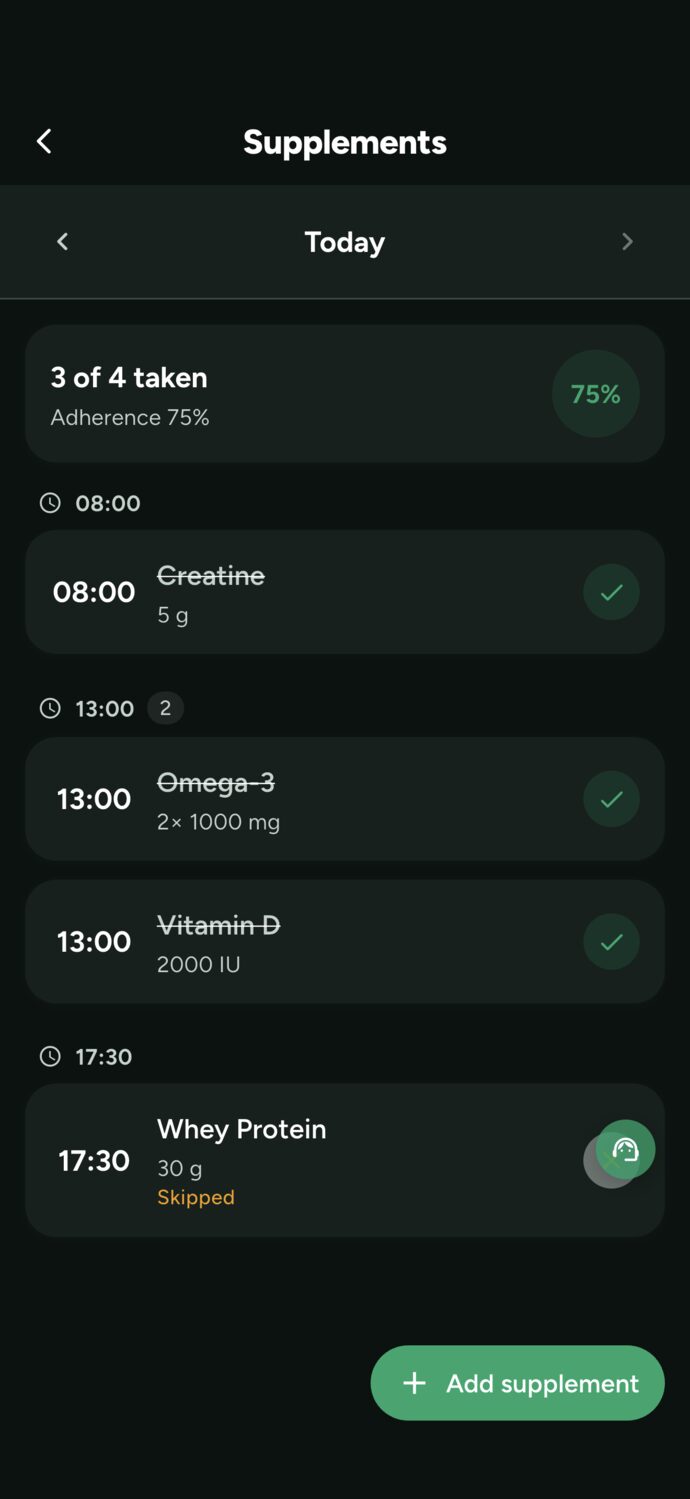
Creatine, whey, omega-3, vitamin D: every supplement is set up with its dose, times, and days of the week. Clients get a reminder on their phone and mark it as taken right from the notification, the home screen widget, or the app. Trainers see, day by day, what was taken, skipped, or missed. For clients, it's free.
Four steps, on your phone or computer. The protocol goes from paper (or a lost WhatsApp message) to reminding itself.
Name, form (powder, capsule, tablet, liquid, gummy), dose and unit (g, mg, IU, scoop, drops, spoon), how many units per serving, one or more times, the days of the week, and, for a cycle, the end date.
Notification at the scheduled time, in the client's own time zone. Anything due at the same time is bundled into a single notification, and anything already checked off won't trigger a reminder.
Mark as taken right from the notification, the home screen widget, or the app. Didn't mark it? 30 minutes later, a second reminder shows up.
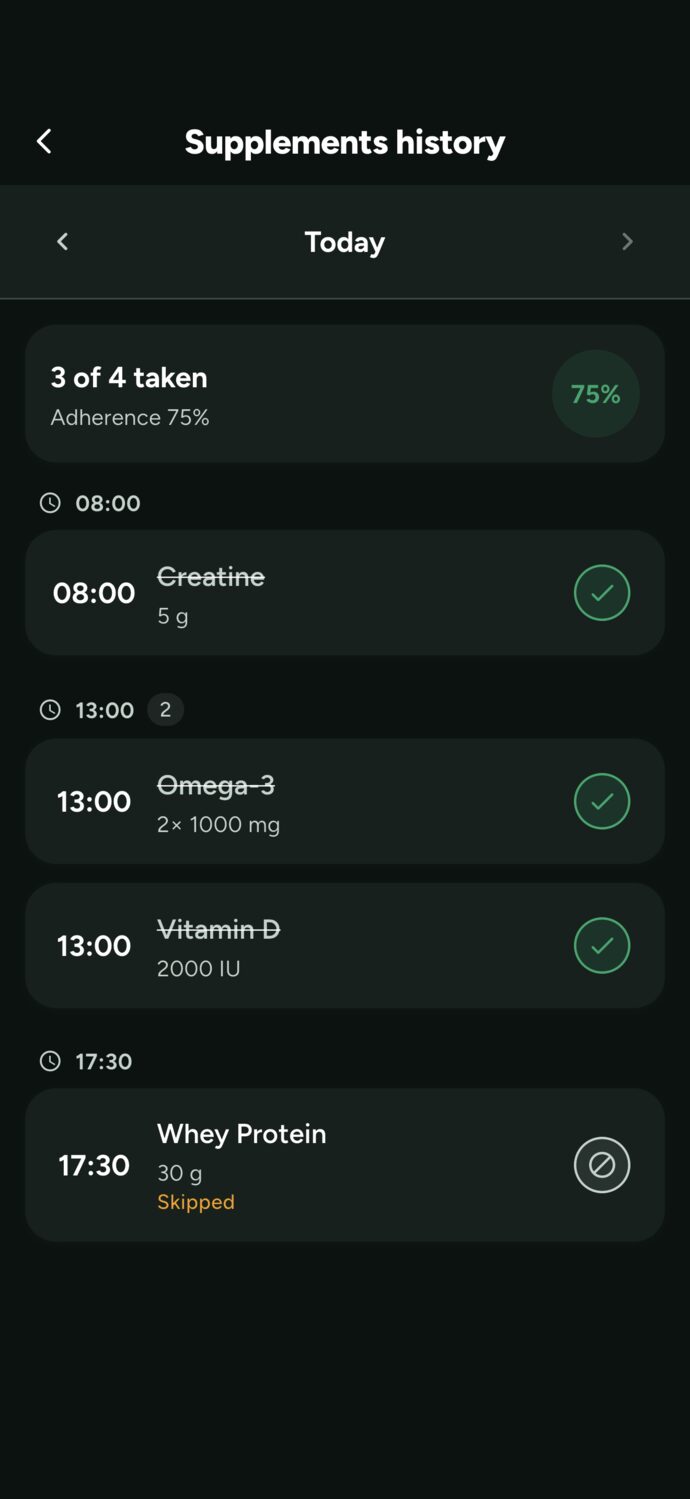
Every dose becomes taken, skipped, or overdue. The client sees the day broken down by adherence percentage, and the trainer sees the same thing on their profile.
Spreadsheets and phone alarms don't know that creatine is every day, whey is only on training days, and vitamin D has an end date. Here, every supplement carries its own rule.
The research on supplements was done with people who took them every single day. What tanks results is rarely the brand or the dose — it's forgetting three times a week.
You open the student's profile and see their whole day: what was taken, what they skipped, and what's overdue. No need to ask on WhatsApp, no relying on anyone's memory.
Trainer Connect also builds meal plans with AI. Based on the client's assessment, intake form, and training frequency, the AI picks foods from the USDA database, and the server calculates calories and macros. The client follows the meal plan with a reminder for each meal and logs their plate with a photo. See how AI-powered meal plans work.
Supplements fit into the same routine, each with its own reminder: creatine at breakfast, vitamin D at lunch, whey after the workout. Workouts, meals, supplements, and water all live in one app, with a history you can track.
One thing AI doesn't do, and that's on purpose: it doesn't prescribe supplements. The generated meal plan covers food only. Individual supplementation protocols are the responsibility of a licensed nutritionist or physician, so the qualified professional decides what the client takes, and the app makes sure they actually take it.
Meal plans generated in seconds using the TACO nutrition database, with targets calculated automatically and reviewed by you before they reach the student.
The client checks off each meal and gets a reminder at the right time; you see the weekly percentage right next to supplement adherence.
Daily water goal and one-tap logging, in the same app as supplements and meal plans.
Editor with nearly 600 foods from the USDA database, everyday portion sizes, substitutions, and a PDF branded with your logo.
The same calorie and macro calculator from the app, available on the website for anyone to use.
Noticed adherence dropping? The conversation is one tap away, right in the app, with the history right there.
The most researched supplements — creatine, whey, omega-3, and vitamin D — were studied in people who took them every single day. Creatine depends on daily use to keep muscle stores topped up; omega-3 and vitamin D build up their effects over months. Taking them "whenever you remember" puts the client outside of what the studies actually measured.
The reasons people forget are always the same: the bottle sits in the cabinet, the supplement isn't tied to any daily habit, and results take weeks to show up, so the client loses motivation first. A reminder tied to something that already happens — breakfast, lunch, post-workout — plus one-tap logging solves most of it. The adherence history shows whether it's actually working before anyone decides the supplement "doesn't do anything."
To dig deeper, the blog has two articles on this topic: why consistency beats dosage, about adherence, and also what trainers can (and can't) recommend about supplements.
Set up the patient's protocol and track whether they're taking it, day by day, right next to their meal plan adherence. In the app, the people you work with show up as clients; to you, they're patients.
Log what the student already takes or what their dietitian recommended, and track consistency right alongside their workouts. Individual supplementation guidance still belongs to licensed professionals.
Supplement tracking is free for the client, with or without a trainer: add a supplement, get the reminder, and track your adherence. Create your account or find a trainer.
Create your free account, add your supplements (or your clients'), and get your first reminder at the next scheduled time.
Create free account →